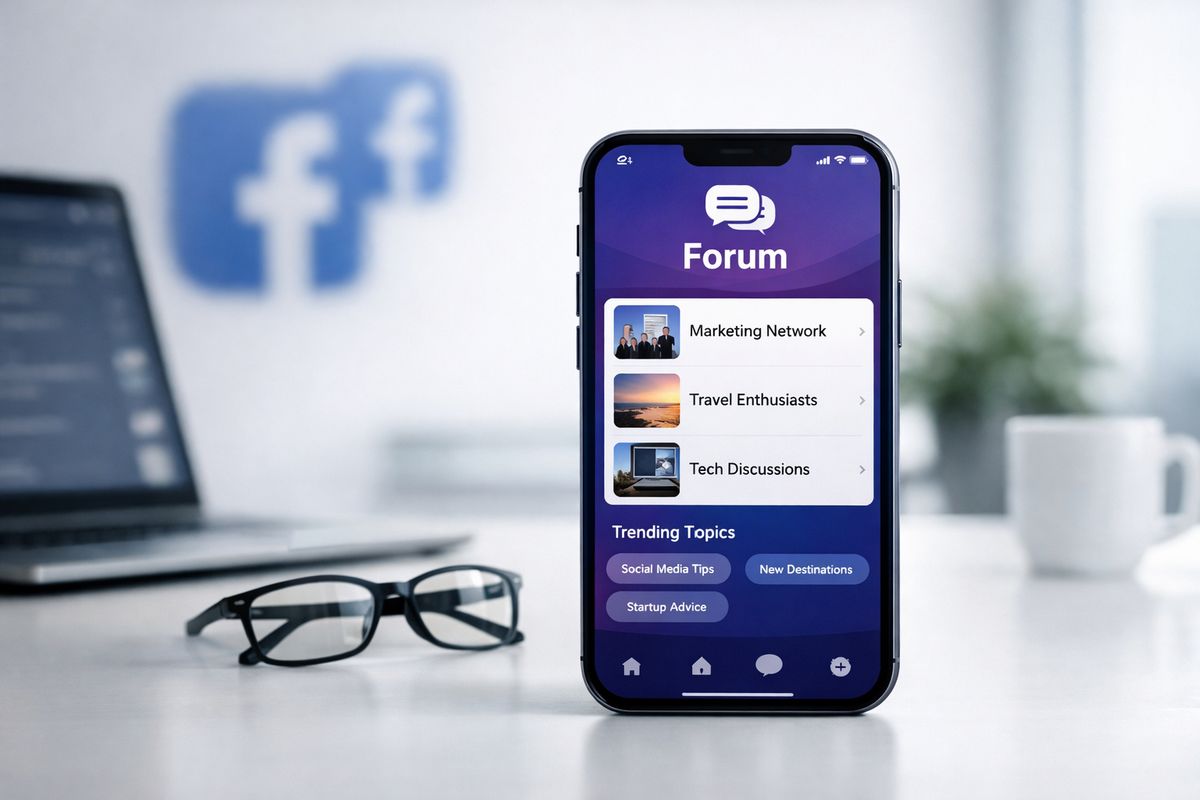
Meta’s launch of a Groups-focused app is more than a product update. For SMEs and organisations around Barcelona, it is a useful signal that digital communities are becoming a more distinct channel, with their own operating model, governance needs, and business value. The question is not whether every company should launch a community app presence. The real question is whether your current social media setup is built to manage audience interaction in a structured way.
For leadership teams, this matters because communities sit between marketing, customer service, sales enablement, and brand trust. If Meta gives Facebook Groups more dedicated attention, businesses should review whether their customer communities, member spaces, or interest-based groups are still treated as side activities instead of managed assets.
Why a Groups-centric app matters
A dedicated app for Groups suggests a clearer separation between broadcast content and community interaction. That distinction matters for businesses. Publishing posts is one thing. Managing recurring discussions, moderation, member engagement, and peer-to-peer interaction is another.
Many companies still run social channels with a campaign mindset only. That approach works for visibility, but it is less effective when customers want ongoing dialogue, practical support, local recommendations, or direct contact with a brand ecosystem. A Groups-focused environment can strengthen engagement, but it also increases the need for clearer ownership and operating rules.
What business leaders should assess now
If your business already uses Facebook Groups, this is the right time to review their purpose. Is the group meant for customer support, loyalty, education, partner coordination, or local community building? Too many groups exist without a defined role, which leads to low engagement or unmanaged conversations.
Leaders should also assess channel overlap. If the same audience is spread across WhatsApp, LinkedIn, email newsletters, CRM workflows, and Facebook Groups, fragmentation becomes a risk. The issue is not simply where the audience is active. It is whether each channel has a clear job in the customer journey.
For companies in the Barcelona area, this is especially relevant when teams operate across languages, markets, or mixed online and offline touchpoints. Community channels can help maintain proximity to audiences, but only if the organisation knows who manages them and how they connect to broader commercial priorities.
Community strategy is not the same as social media posting
A common mistake is to treat a group as another publishing space. In practice, communities require moderation policies, response standards, escalation paths, and measurable objectives. Without this structure, the channel becomes reactive and resource-heavy.
Executives should ask simple but important questions. Who owns the group internally? What types of conversations belong there? Which issues should be redirected to support or sales teams? What data or insights should be captured from recurring discussions? If these questions are unanswered, the platform may grow while business value remains unclear.
This is why community planning should sit inside a wider digital strategy, rather than being handled as an isolated social media experiment.
Governance matters more when platforms change
When a major platform introduces a new app or product layer, businesses often react tactically. They test features, assign someone from marketing to monitor updates, and wait for clearer adoption signals. That is reasonable, but it is not enough if community channels already affect customer experience.
Governance should cover access rights, moderation responsibilities, brand voice, legal review where relevant, and crisis handling. It should also define when to invest more and when not to. Not every business needs a dedicated community effort, and not every audience wants to engage through Groups. Good governance helps companies decide with discipline.
How SMEs should prioritise their roadmap
For most SMEs, the right response is not to launch something new immediately. It is to review the current roadmap. Start by mapping existing channels, audience intent, and internal ownership. Then decide whether community building is a strategic priority or simply a legacy activity that needs rationalisation.
If Groups are important to your business, create a practical roadmap with short milestones. Define the audience, clarify the value proposition for members, set moderation rules, and identify metrics that reflect business outcomes rather than vanity engagement. If Groups are not strategic, document that decision and focus resources elsewhere.
This kind of roadmap discipline is often more valuable than reacting quickly to platform news. It prevents duplicated effort and helps teams align marketing, service, and commercial functions around one operating model.
What to do next
Business leaders should treat Meta’s move as a prompt for review, not as an automatic opportunity. First, audit your current community presence across social and messaging platforms. Second, define whether community is a marketing channel, a service layer, or a relationship asset. Third, assign ownership and rules before scaling activity. Fourth, decide what role, if any, Facebook Groups should play over the next 12 months.
For organisations around Barcelona looking to structure digital channels more effectively, the main value is not the new app itself. The value is using this moment to improve channel governance, clarify community goals, and align platform choices with business priorities.