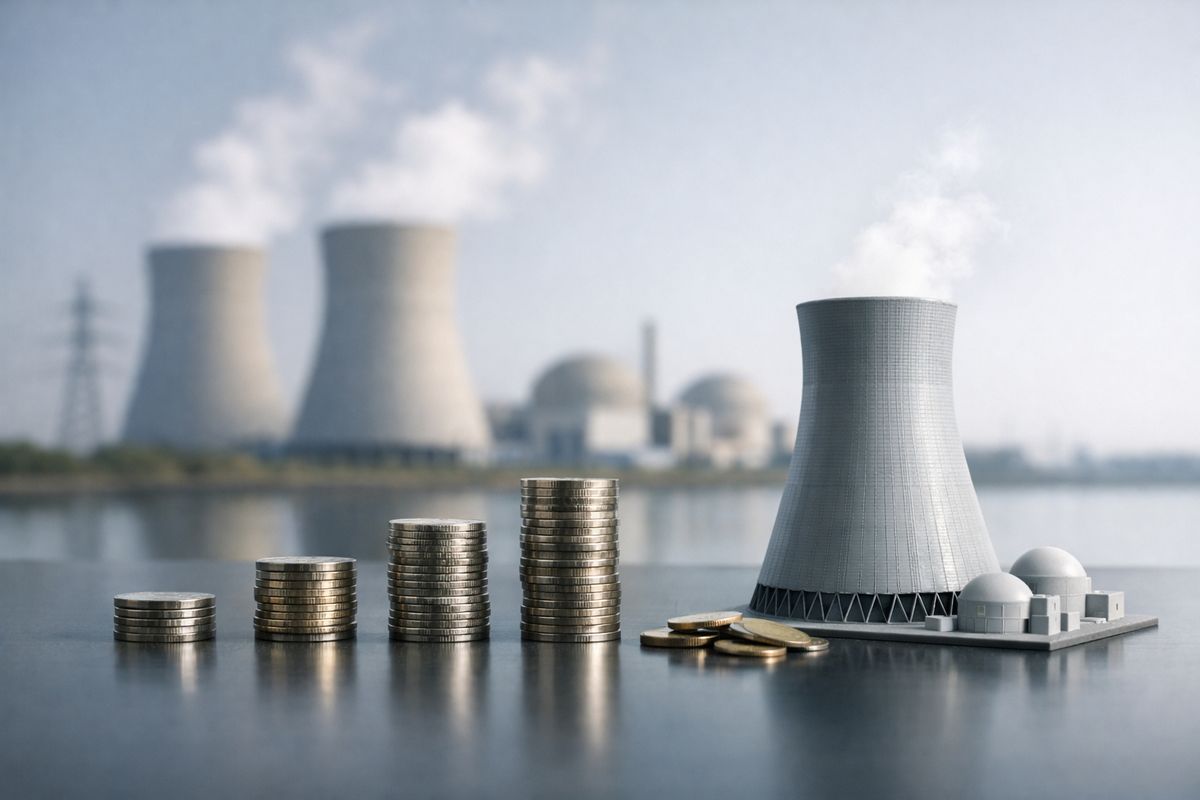
Nuclear power is back in boardroom discussions, not only as an energy policy topic but as a strategic business issue. For energy-intensive companies, infrastructure investors, industrial operators, and digital leaders, the real question is not whether nuclear matters. It is how much more existing and future nuclear capacity can realistically contribute to reliable supply, cost stability, and decarbonization planning.
The answer is nuanced. Nuclear plants can often deliver more through life extension, uprates, modernization, and better integration with the wider power system. But the commercial value depends on regulation, asset condition, supply chain readiness, data quality, and long-term operating strategy.
What “more” actually means in nuclear power
When people ask how much more nuclear plants can give, they usually mix several different issues. One is whether existing plants can operate for longer than originally planned. Another is whether they can generate more output through technical upgrades. A third is whether nuclear assets can support new demand patterns such as electrified industry, data centers, hydrogen production, or grid balancing requirements.
For business leaders, these are not abstract engineering questions. They affect electricity procurement, site selection, capital planning, resilience strategy, and industrial competitiveness. A plant that runs safely for longer, or produces more reliably, changes assumptions across the value chain.
Where additional value usually comes from
The first source of additional value is plant life extension. If a nuclear asset can continue operating safely beyond its initial design horizon, it can preserve large volumes of low-carbon baseload generation without the full cost and delay of building new capacity. For markets facing retiring thermal assets or volatile gas prices, that matters.
The second source is performance improvement. Some plants can increase output through uprates, refurbishment, control system modernization, turbine upgrades, and improved outage management. The upside is not unlimited, and every asset has technical constraints, but incremental gains can be commercially meaningful.
The third source is system integration. Nuclear is increasingly discussed not only as a power generator but as part of a broader industrial ecosystem. That can include supporting electrification strategies, supplying power to high-demand facilities, or pairing with digital monitoring and forecasting capabilities that improve planning across the grid and enterprise operations.
Why this matters beyond the energy sector
Business leaders outside utilities should pay attention because nuclear availability shapes the operating environment. Manufacturers, logistics operators, infrastructure owners, and technology companies all depend on power systems that are reliable, affordable, and compatible with decarbonization goals.
If nuclear output is extended or expanded, companies may benefit from more predictable supply conditions and a stronger basis for long-term energy contracts. If nuclear assets underperform, retire early, or face delays in replacement, companies may need to prepare for higher price volatility, capacity constraints, and tougher investment decisions around on-site generation, storage, or demand flexibility.
This is also a data and planning challenge. Energy strategy is no longer separate from operational strategy. For many organizations, it belongs within a wider digital strategy that connects infrastructure assumptions, demand forecasting, asset planning, and risk management.
What limits how much more nuclear can deliver
There is no simple answer because the limiting factors are not only technical. Safety regulation is decisive, and rightly so. Plant age, maintenance history, component condition, workforce capability, and supply chain availability all influence what is feasible.
Economic constraints matter as much as engineering ones. A plant may be technically extendable but commercially unattractive if required investment is too high, licensing timelines are uncertain, or market structures do not reward dependable low-carbon generation. Political decisions can also accelerate or block options regardless of technical potential.
For executives, this means avoiding simplistic assumptions. Nuclear can be a major contributor, but planning should be built on scenario analysis rather than a single forecast.
What business leaders should do next
First, identify where your organization is exposed to power market uncertainty. That includes direct electricity consumption, dependence on energy-intensive suppliers, expansion plans tied to grid access, and decarbonization commitments that assume clean power availability.
Second, build multiple energy scenarios into investment planning. Include cases where nuclear capacity is extended successfully, where projects are delayed, and where generation availability is tighter than expected. This helps test resilience before major capital decisions are locked in.
Third, improve the quality of your operational and demand data. Better internal visibility makes it easier to negotiate contracts, evaluate flexibility options, and prioritize energy-related investments with confidence.
Fourth, align energy assumptions with digital transformation initiatives. The organizations that respond best to infrastructure uncertainty are usually those that connect data, operations, and strategy rather than treating them as separate workstreams.
A practical lens for decision-makers
The most useful business question is not whether nuclear power can solve everything. It is where additional nuclear output, extended asset life, or improved reliability changes your planning choices today. In some sectors, that may support expansion. In others, it may reduce procurement risk or delay the need for more expensive alternatives.
Nuclear plants can often give more, but not automatically and not everywhere in the same way. The organizations that benefit most will be those that translate energy system developments into concrete decisions on operations, sourcing, technology, and capital allocation.